

What is The Function of Shock Absorber?
How does a Shock Absorber Work?
How Many Different KYB Shock Absorber Constructions are There?
Do Worn Shock Absorber Affect Drivability?
When Replacing a Worn Shock Absorber?
Why Should I Choose KYB When Replacing My Shock Absorbers & Struts?
When Replacing Worn Struts, Should Other Suspension Parts be Replaced?
What are The Obvious Visual Signs of a Worn Shock Absorber?
How is The Suspension in a Sports Car Different to The Suspension in an Average Family Sedan?
Does KYB Manufacture Other Non-Automotive Products?
How may type of Ball Joint?
Where is The Tie Rod End Installed? & What is Its Function?
What are Steering & Suspension Parts?
How to Know What is a Good Ball Stud?
How to Inspect Steering Parts?
When Do You Need to Replace Steering & Suspension Parts?
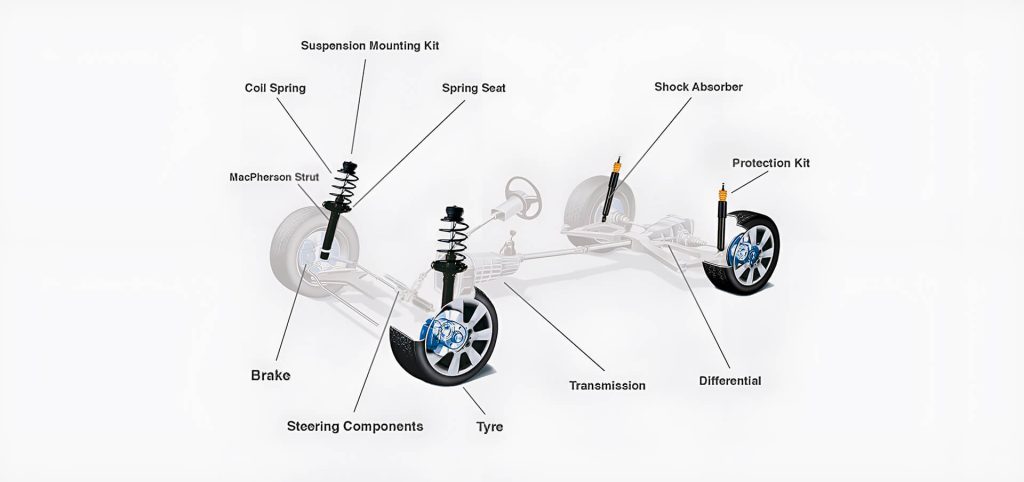
THE FUNCTION OF A SHOCK ABSORBER IS TO CONTROL A VEHICLE’S MOVEMENT WHEN THE TYRES COME INTO CONTACT WITH A BUMP IN THE ROAD.
The shock absorber offers resistance to the suspension system to slow vehicle movement to a controllable state. Without the dampening effects of a shock absorber, the vehicle would not react by reducing speed and may as a result bounce or roll off the road. Listed below are five key functions of a shock absorber.
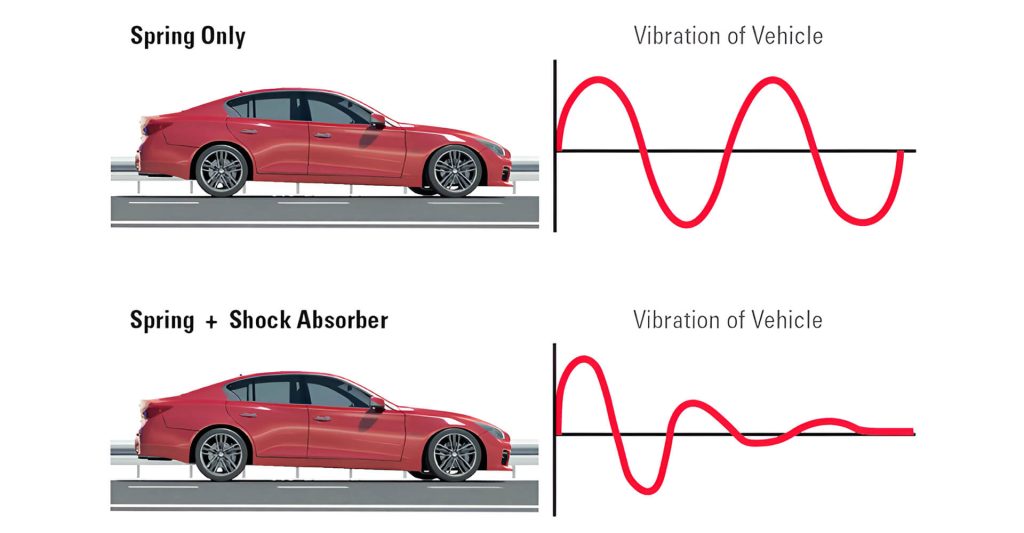
WHEN DRIVING, ROAD SURFACE IRREGULARITIES CAUSE SHOCKS ABSORBERS AND STRUTS TO COMPRESS AND EXTEND, FORCING FLUID THROUGH A SERIES OF SPEED SENSITIVE VALVES, (THE PISTON ROD SPEED DETERMINES THE APPROPRIATE VALVE) TO RESTRICT OIL FLOW AND CONTROL VEHICULAR MOVEMENT.
This friction causes heat to be generated in the oil as it passes through the valves. This heat is then dissipated through the outer body of the shock absorber and cooled by air passing over it. Meanwhile, nitrogen gas adds pressure to the hydraulic oil to make the shock absorber more reactive to movement, to delay the onset of fading and foaming and to make it a high performing product.
Twin Tube Shock Absorber
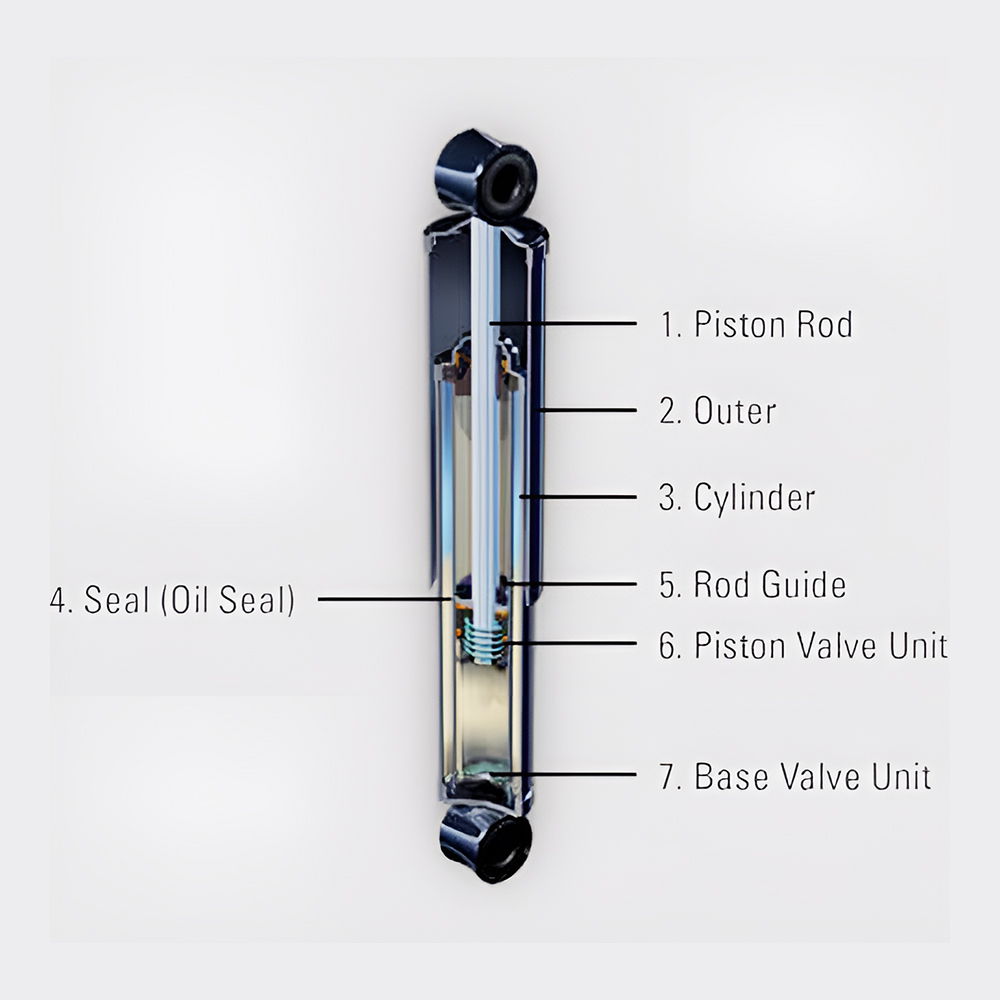
Twin Tube Shock Absorber
WHEN DRIVING, ROAD SURFACE IRREGULARITIES CAUSE SHOCKS ABSORBERS AND STRUTS TO COMPRESS AND EXTEND, FORCING FLUID THROUGH A SERIES OF SPEED SENSITIVE VALVES, (THE PISTON ROD SPEED DETERMINES THE APPROPRIATE VALVE) TO RESTRICT OIL FLOW AND CONTROL VEHICULAR MOVEMENT.
This friction causes heat to be generated in the oil as it passes through the valves. This heat is then dissipated through the outer body of the shock absorber and cooled by air passing over it. Meanwhile, nitrogen gas adds pressure to the hydraulic oil to make the shock absorber more reactive to movement, to delay the onset of fading and foaming and to make it a high performing product.
SIMPLY PUT: MORE WEAR = LESS VEHICLE CONTROL
There are two detrimental influences that begin to affect vehicle drivability as shock absorbers come to the end of their lifecycle:
SEE BELOW FOR EXAMPLES OF EFFECTS OF WORN SHOCK ABSORBERS
This friction causes heat to be generated in the oil as it passes through the valves. This heat is then dissipated through the outer body of the shock absorber and cooled by air passing over it. Meanwhile, nitrogen gas adds pressure to the hydraulic oil to make the shock absorber more reactive to movement, to delay the onset of fading and foaming and to make it a high performing product.
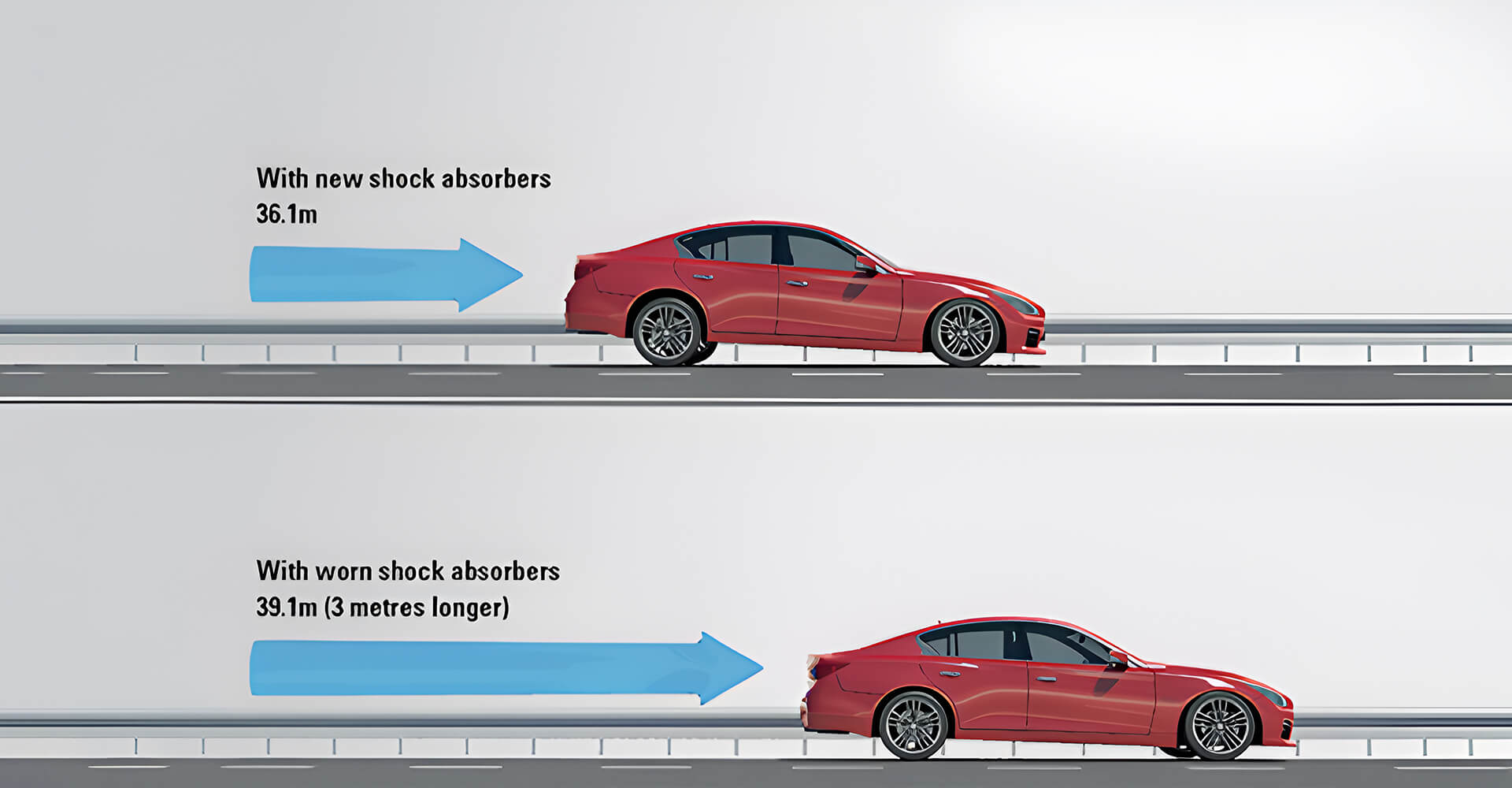
BRAKING DISTANCE
When you apply the brakes, the tyres begin stopping but the vehicle body inertia tries to keep going forward. The result thrusts the front end downward and the back end upward. This imbalance puts stress on the front brakes and reduces the rear brake’s efficiency. The effect then makes controlling and steering the vehicle more difficult. As shock absorbers and struts wear and the tyre to road contact becomes less effective, there is a dramatic increase in vehicle braking distance.
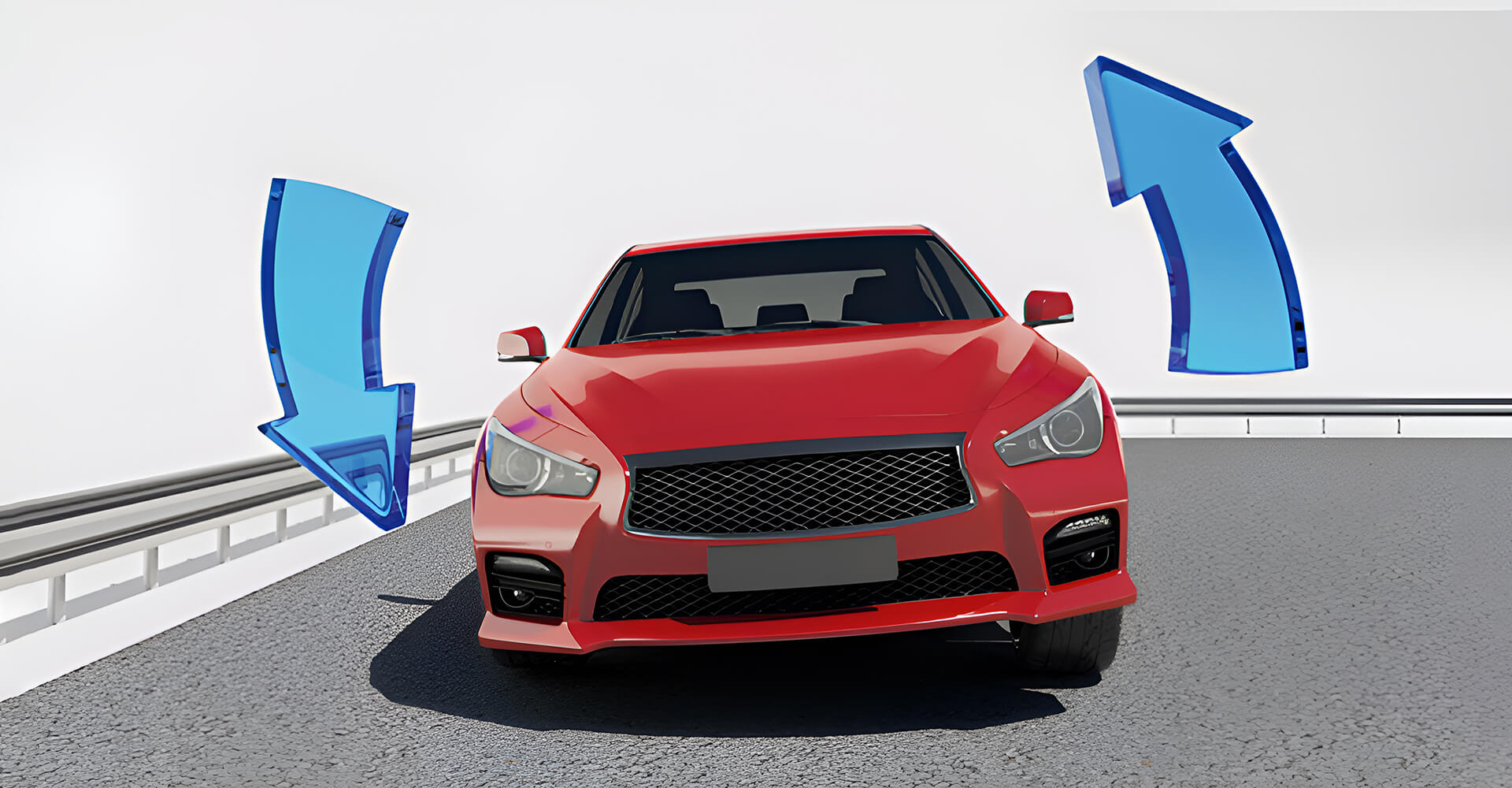
BODY ROLL
During cornering or swerving the vehicle body weight tries to lift & roll toward the outside of the turn. Controlling the weight shift via steering correction or slowing the vehicle speed are the only ways to reduce the effect, but will become difficult as conditions worsen.
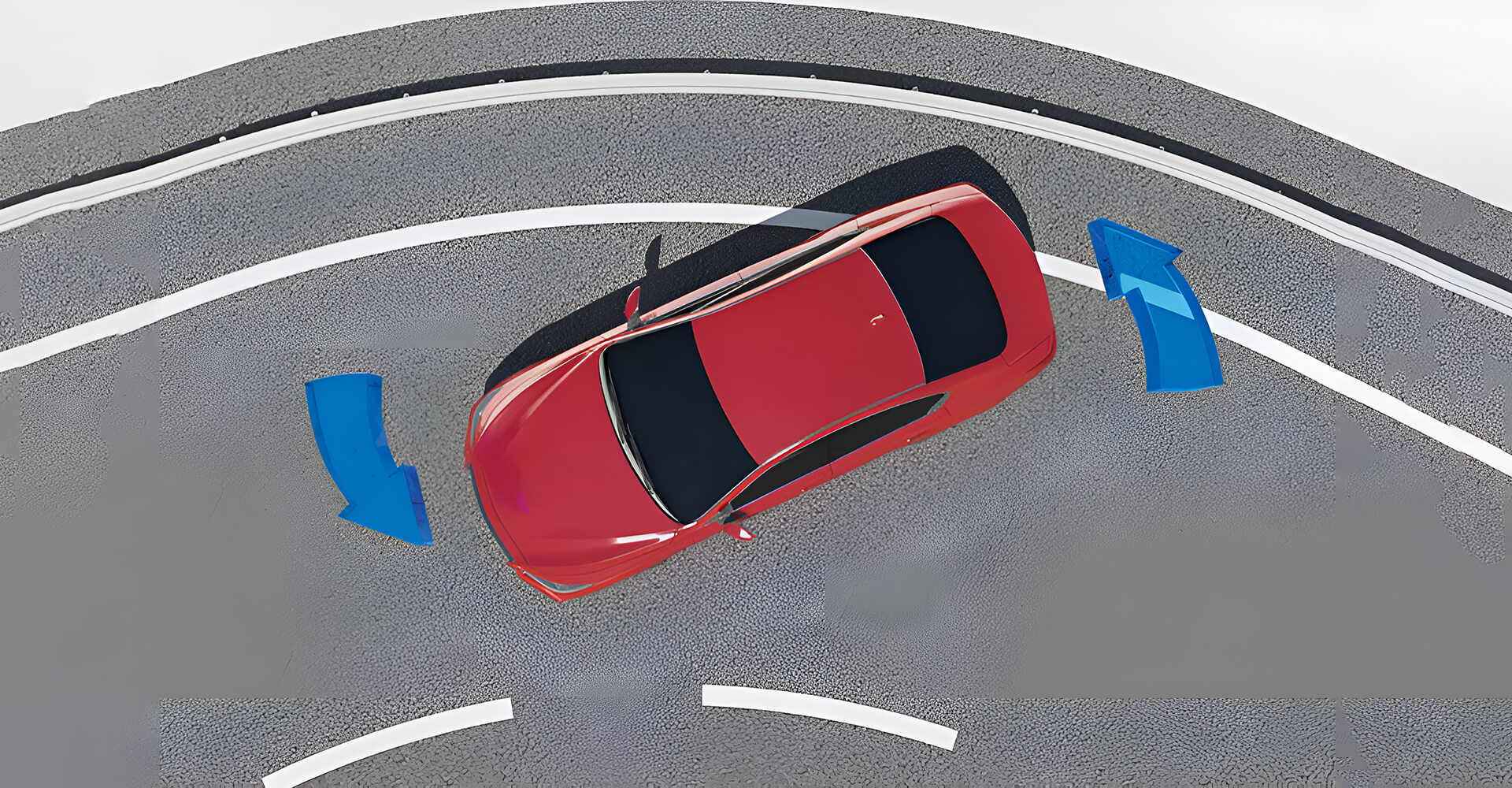
TRACTION LOSS
When tyres can’t grip the road, for any reason at all, the result is loss of control. This can occur during braking, accelerating or cornering; when the tyres are bouncing or the vehicle body inertia is lifting or pushing the tyres; when the tyre tread is worn; when the tyres are improperly inflated; or when the shocks and struts aren’t controlling tyre and body movements.
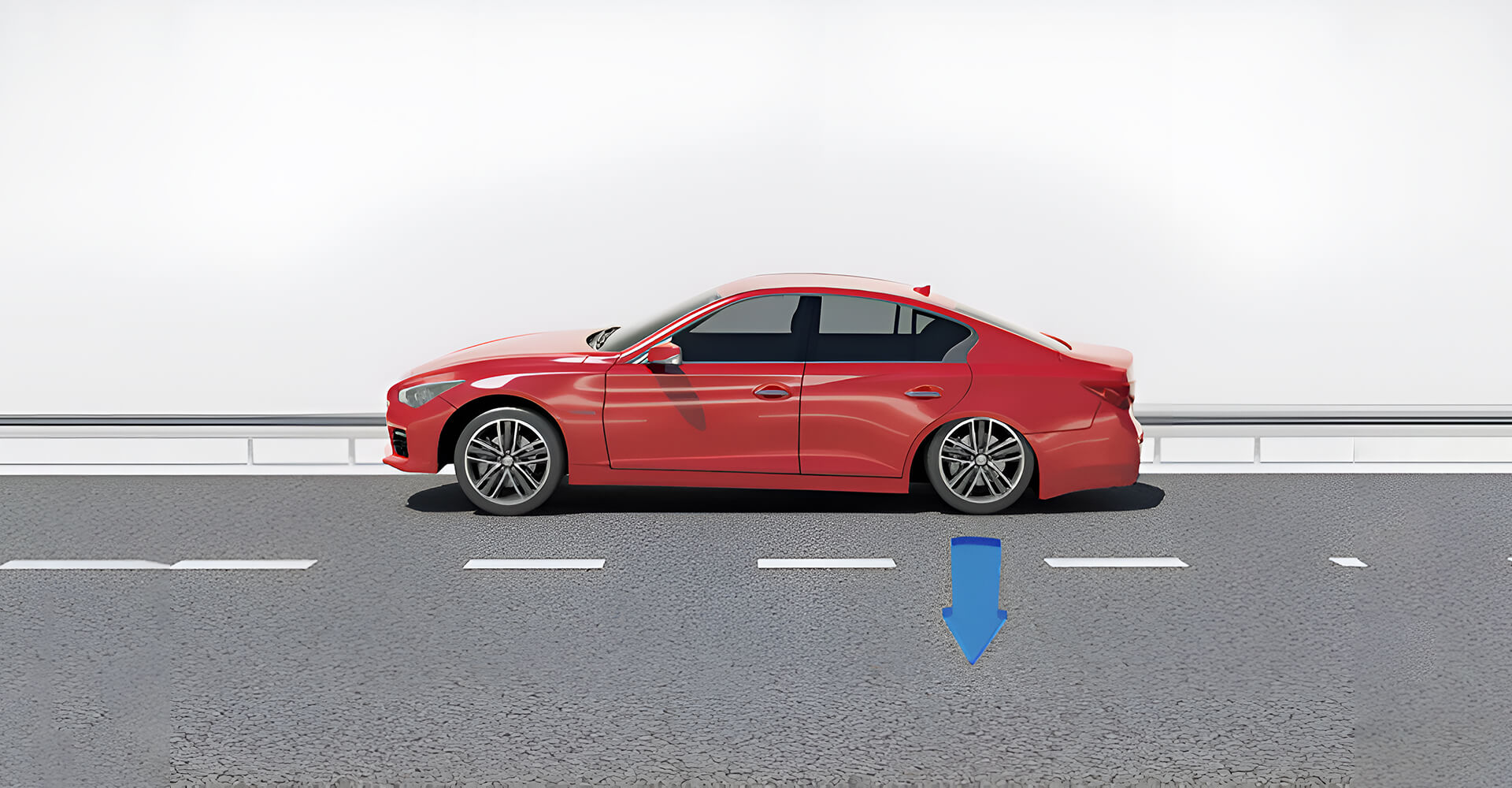
ACCELERATION SQUAT
During initial acceleration from idle position, the front end rises and the back end lowers. Front end rise is controlled by the rebound damping in the shock. On a front wheel drive vehicle this results in traction loss and reduces steering control.
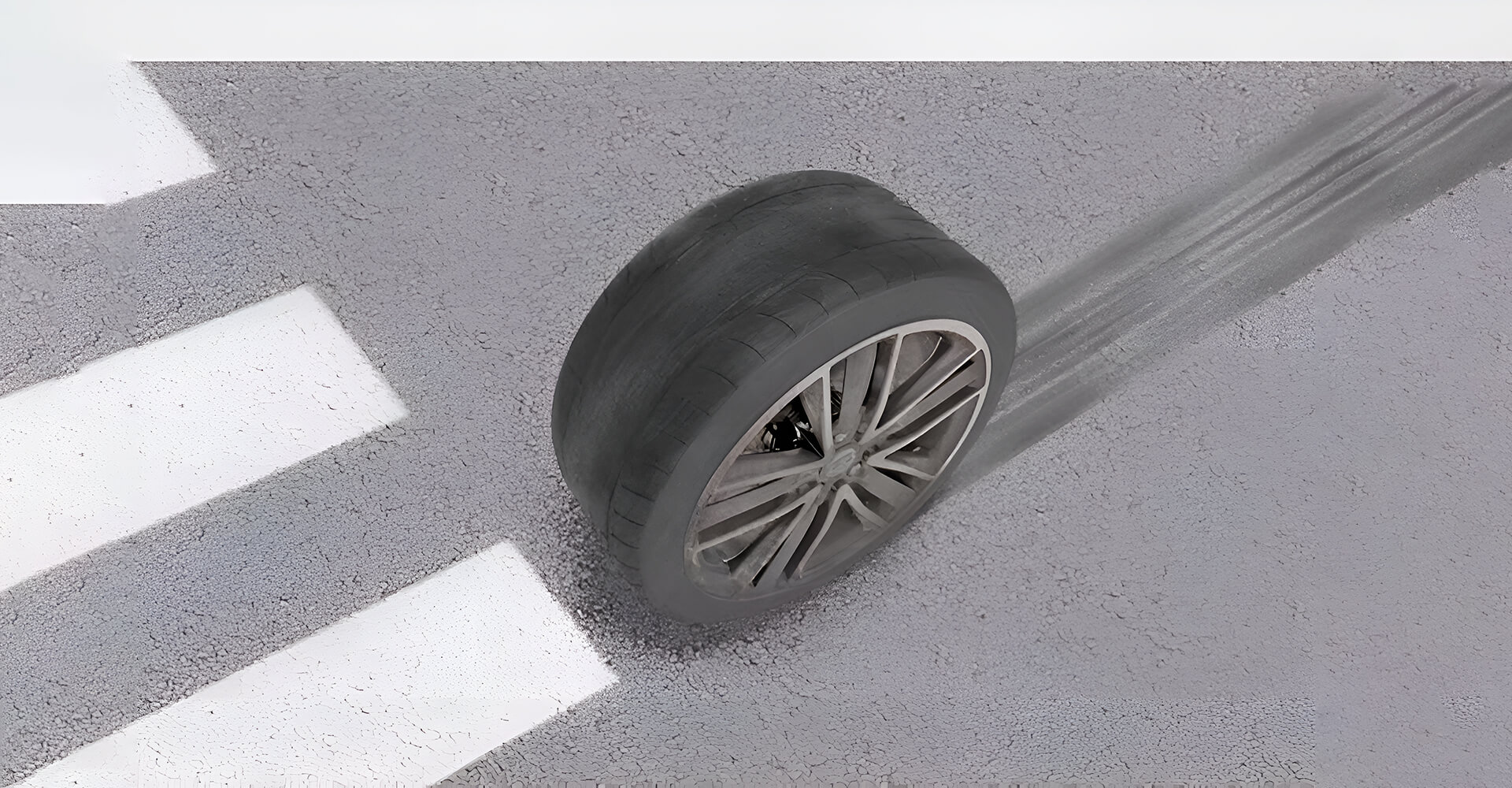
UNEVEN TYRE WEAR
When the tyre is allowed to move up & down excessively, a rhythmic movement develops and an evenly-spaced tread wear pattern begins. Unlike tyre balance conditions, the wear pattern frequency is greater from shorter tyre movements that are not being dampened by worn shocks or struts. As the condition worsens, tyre noise occurs along with traction loss and tyre damage.
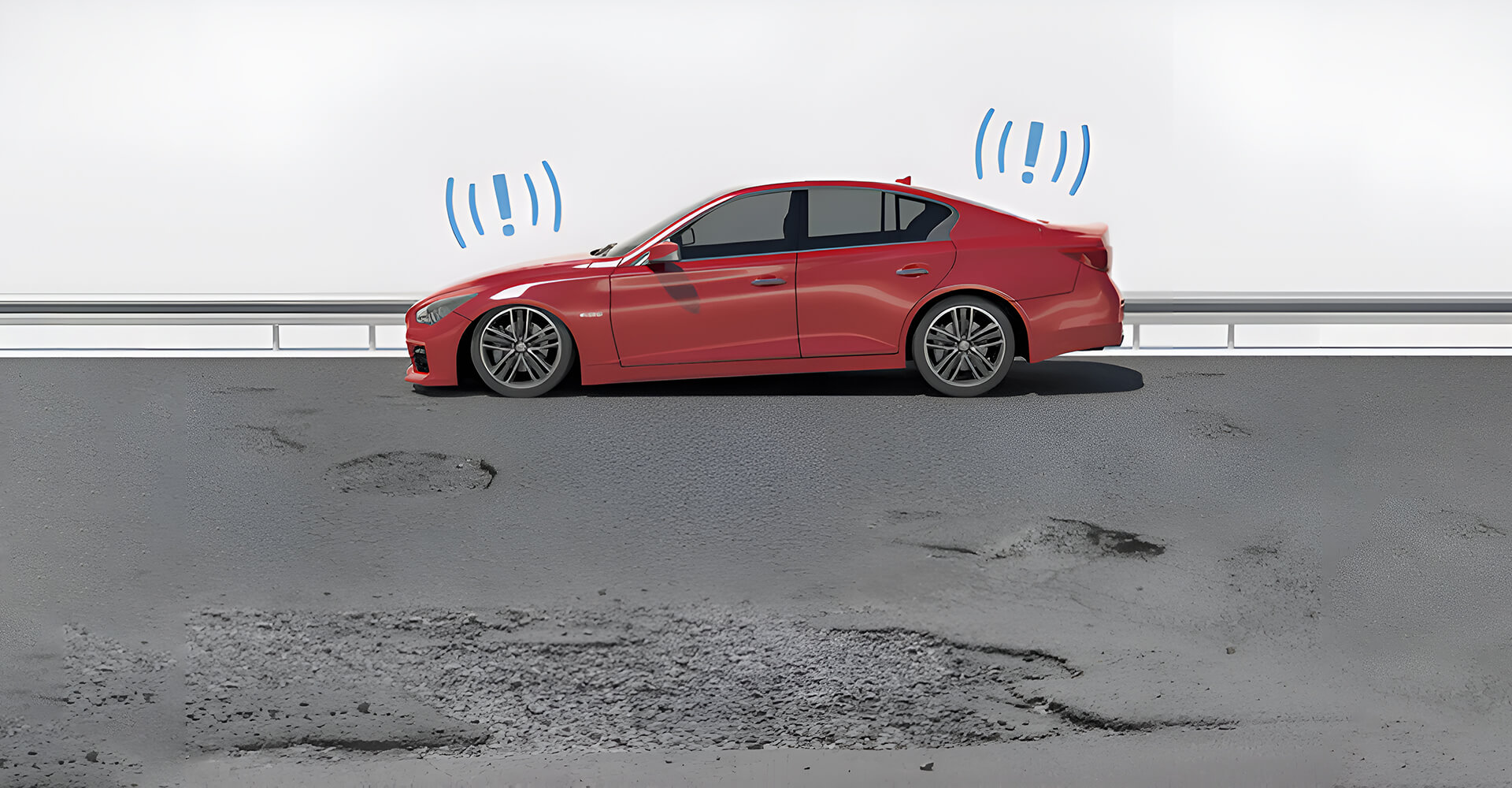
BOTTOM OUT
Reacting to a bump is normal. But when the tyre is allowed to over-react and move upward too aggressively, the travel must be stopped by a bump stop. This is an indication that either the vehicle is being operated beyond its normal ability, such as being over-loaded or being driven too harshly. Or it could mean that the shock absorbers are worn and can no longer resist wheel movement adequately.
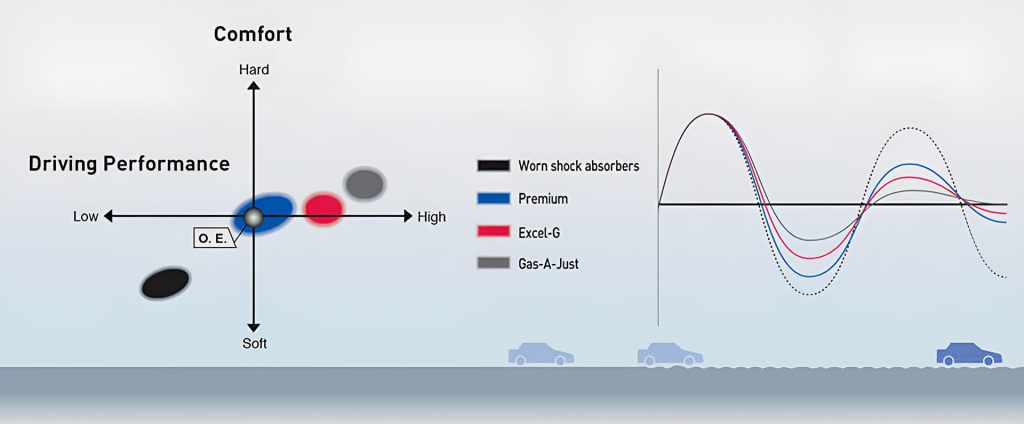
SHOULD I REPLACE THE PAIR / JUST THE FAULTY INDIVIDUAL ITEM?
TO ENSURE THE VEHICLE PERFORMS SAFELY AND AS DESIGNED, WE RECOMMEND REPLACING STRUTS AND SHOCK ABSORBERS AS PARALLEL PAIRS (LEFT & RIGHT)
When the damping rates are significantly different from side to side the vehicle body and wheel movement variations can cause handling abnormalities. For this reason, replacing both left and right struts and shock absorbers for either the front or rear suspension position, will maintain optimal dampening control symmetry, resulting in an even and balanced drive.
How long should i expect my shock absorbers (or struts) to last?
THE LIFE OF A VEHICLE’S SUSPENSION IS AFFECTED BY A NUMBER OF VARIABLES:
KYB products however have been tried and tested and are designed to last beyond 3 Years/60,000km.
HOW DOES THE RIDE COMFORT OF KYB SHOCK ABSORBERS COMPARE TO THE ‘ORIGINAL EQUIPMENT’ IN MY VEHICLE?
All KYB Shock Absorbers are valved slightly firmer than the original equipment equivalent, to offer greater control and help compensate for the loosening and softening of other suspension components over time. The result is an increased level of driving comfort and performance.
Oversteer
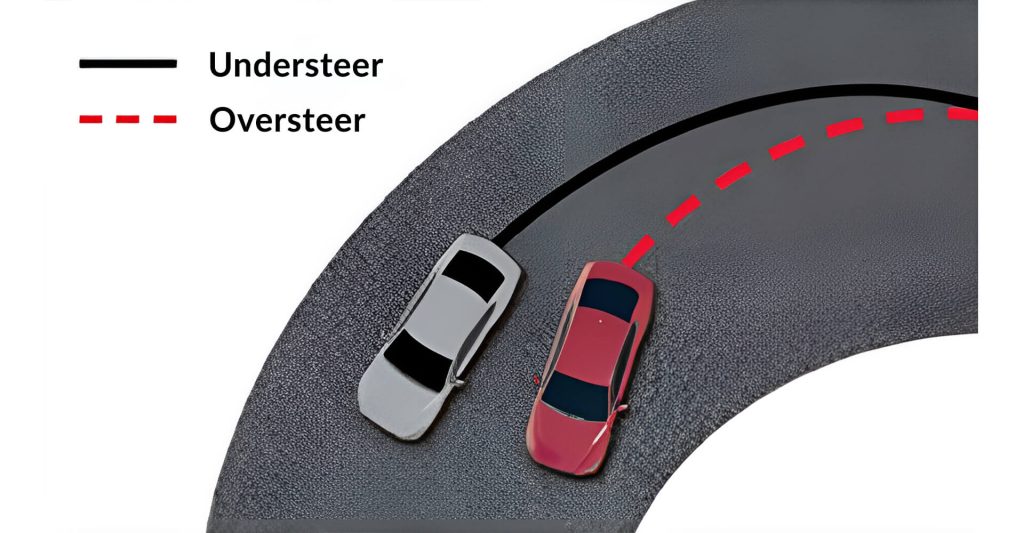
Understeer
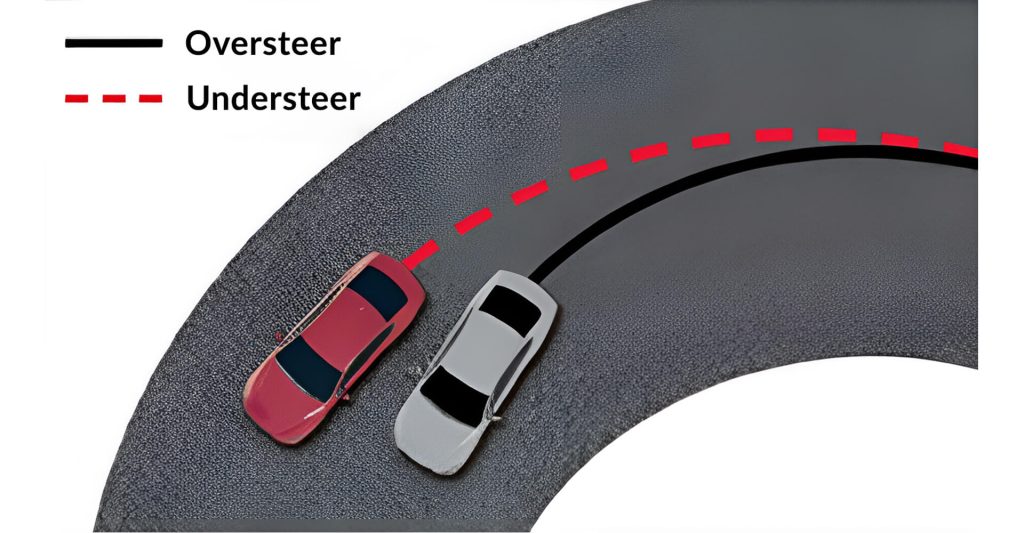
ESTABLISHED FROM 80 YEARS OF ORIGINAL EQUIPMENT EXPERIENCE AND EXPERTISE, KYB CAN DESIGN AND MANUFACTURE PRODUCTS THAT DELIVER THE BEST HANDLING AND RIDE QUALITY FOR EVERY VEHICLE.
KYB suspension products are vehicle specific, making each part ideal for its corresponding make and model. In addition, KYB considers the specific factors that each unique vehicle demands, for example: vehicle type, intended use, level of comfort and performance. All KYB products comply with the global ISO standards of manufacturing, adhering to stringent procedures and processes with high levels of repeatability and quality control.
WHAT ARE THE OBVIOUS VISUAL SIGNS OF A WORN SHOCK ABSORBER?
A VISUAL INSPECTION CAN OFTEN PROVIDE THE INITIAL CLUES FOR DIAGNOSING DIMINISHED SHOCK ABSORBER PERFORMANCE.
Here are some visual signs to assist in identifying a worn shock absorber or strut:
WHAT IS THE DIFFERENCE BETWEEN AN OVERSTEER AND AN UNDERSTEER?
Oversteer occurs when a vehicle turns (steers) more than the amount required by the driver. This often occurs when more acceleration than necessary is applied with front wheels turned. Understeer occurs when a vehicle turns (steers) less than the amount required by the driver. This often occurs when travelling too quickly around a corner or by applying too much power when exiting a corner. As a worn shock absorber’s capacity to control wheel and body movement reduces, the occurrence of vehicle oversteer or understeer is greatly increased.
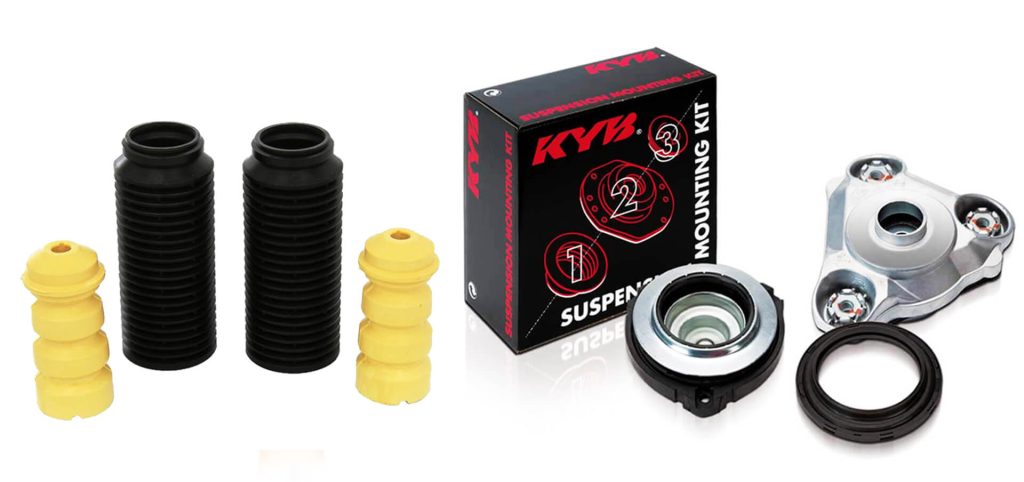
YES, IT IS A GOOD IDEA TO INSPECT AND REPLACE WORN STRUT MOUNTS, BUMP STOPS AND PROTECTION BOOTS WHEN REPLACING STRUTS.
Replacing struts in a vehicle can be very time intensive as it requires the entire strut to be removed and disassembled. The strut mount optimizes suspension performance by providing a smooth steering response and reducing vibration. Bump stops safeguard the strut from bottom-out damage, and protection boots provide protection to the struts piston rod from road debris (e.g. dirt, dust, salt and stones).
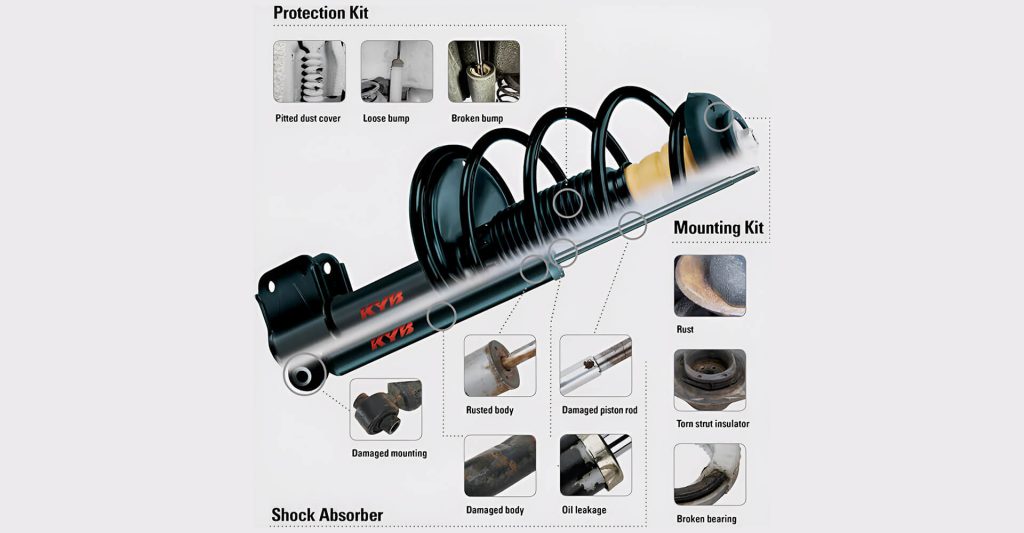
A VISUAL INSPECTION CAN OFTEN PROVIDE THE INITIAL CLUES FOR DIAGNOSING DIMINISHED SHOCK ABSORBER PERFORMANCE.
Here are some visual signs to assist in identifying a worn shock absorber or strut:
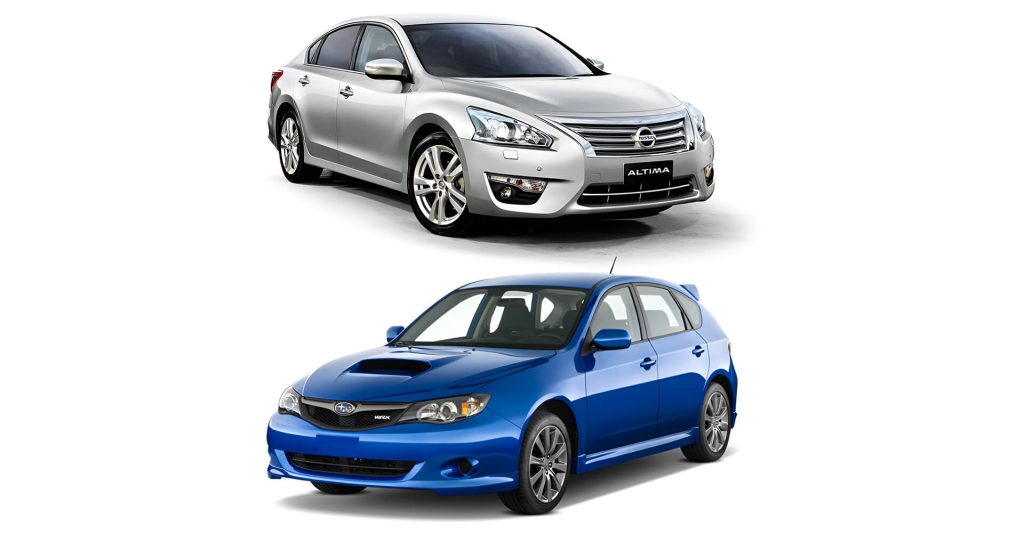
THE INTENDED PURPOSE OF A SPORTS CAR AND A FAMILY SEDAN ARE VERY DIFFERENT AND AS SUCH SO IS EACH VEHICLE’S SUSPENSION.
The average family car typically offers a smooth and controlled drive, with little road surface feedback or noise transmitted into the cabin. It also generally has little body roll, with a high level of comfort. A sports car on the other hand, demands sharp and responsive handling and delivers a ride quality that can be firm and at times harsh. With a low centre of gravity and virtually no body roll, there is substantial road surface feedback and noise transmitted into the cabin. The differences between the suspension in both vehicles is a result of the strut and shock absorber specific valve coding, matched to specific coil spring rates. Each combination works in unison to deliver the unique ride quality and demanded performance for every vehicle on the road.
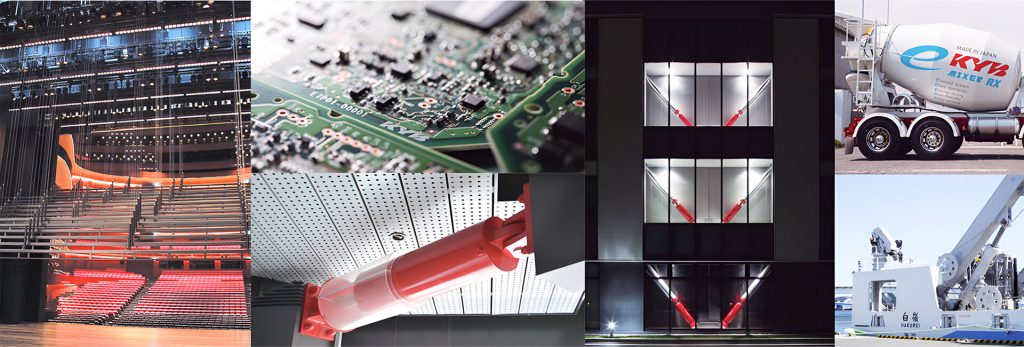
KYB MANUFACTURES MANY OTHER GLOBAL PRODUCTS WITHIN THE HYDRAULICS INDUSTRY, INCLUDING BUT NOT LIMITED TO:
Vibration-Control Technologies
Power-Control Technologies
System Technologies with Advanced Functions
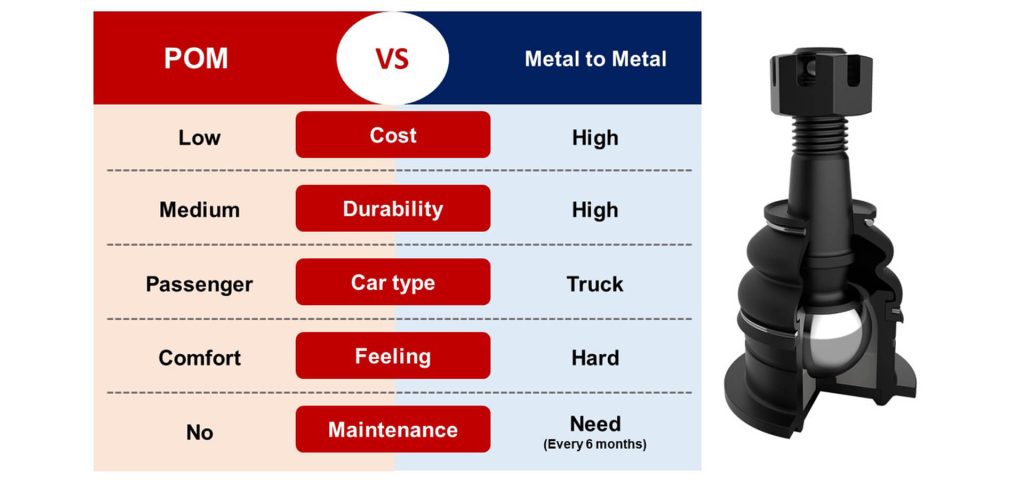
Metal to Plastic
- Advantage: Smooth and comfortable, maintenance-free, and covers a wider range of applications.
Metal to Metal
- Advantage: Durable to high temperature, heavy-duty, but maintenance must be done by greasing every 3 or 6 months.
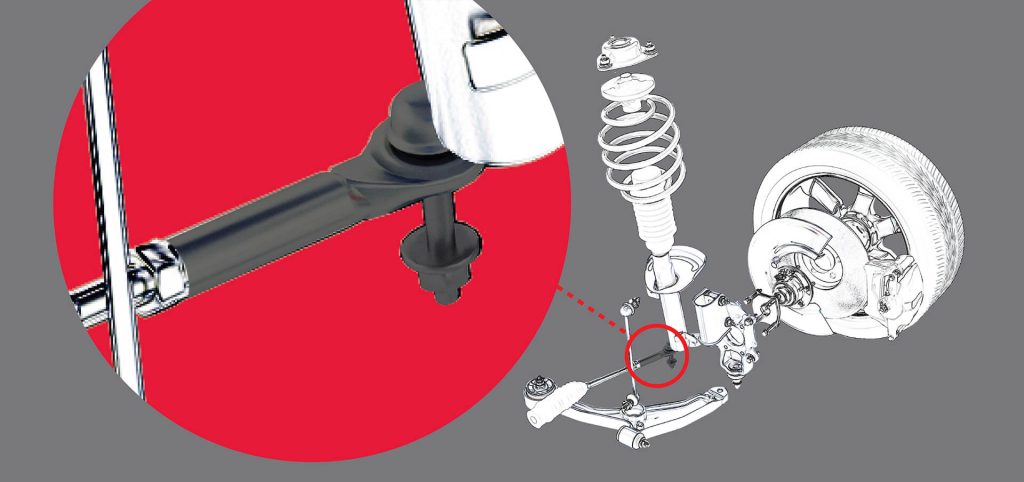
The Tie Rod End connects the steering rack to the wheel hub. Tie rod ends are installed on both sides of the rack end. This is used for wheel alignment during toe in/out and also used for the control of the wheel when turning left or right.
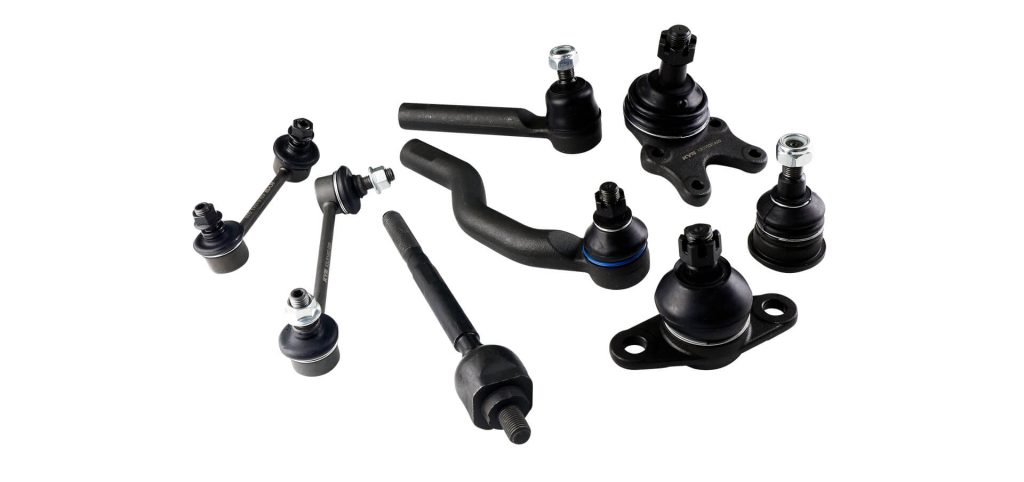
Steering parts are the joints between the steering unit/rack and the wheel hub. This is used to help control the angle of the steering part when moving left or right. Also it is used to adjust the toe in/out for camber alignment of the front wheel. Suspension parts, such as ball joint and stabilizer link, are used to control the stability of the car when driving on the road.
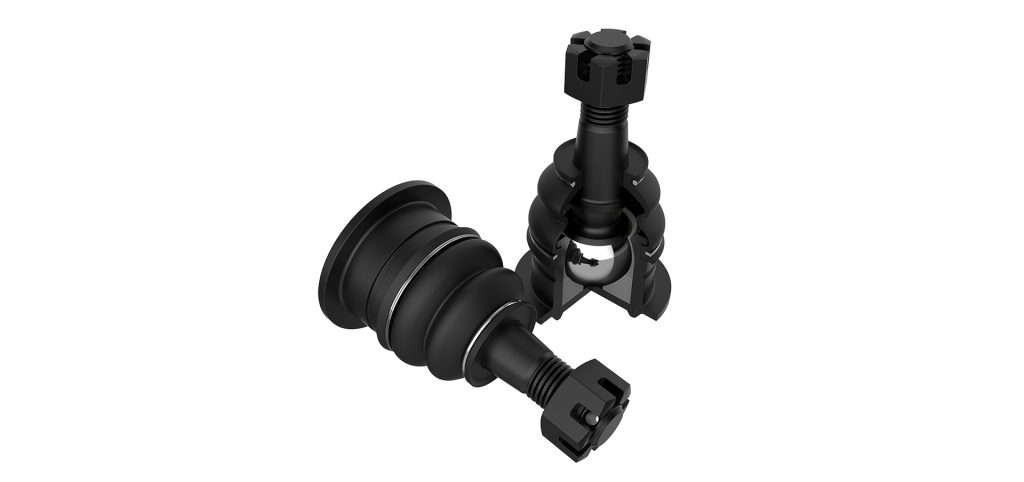
Ball studs are subjected to high force and stress, particularly on the neck area. A good quality ball stud should be designed with a one-piece body and the ball’s surface should be allowed to glide to prevent cracking, abrasion, and adhesion. A common indicator of a problem is when the stud produces noise or if the ball stud loses torque quickly.
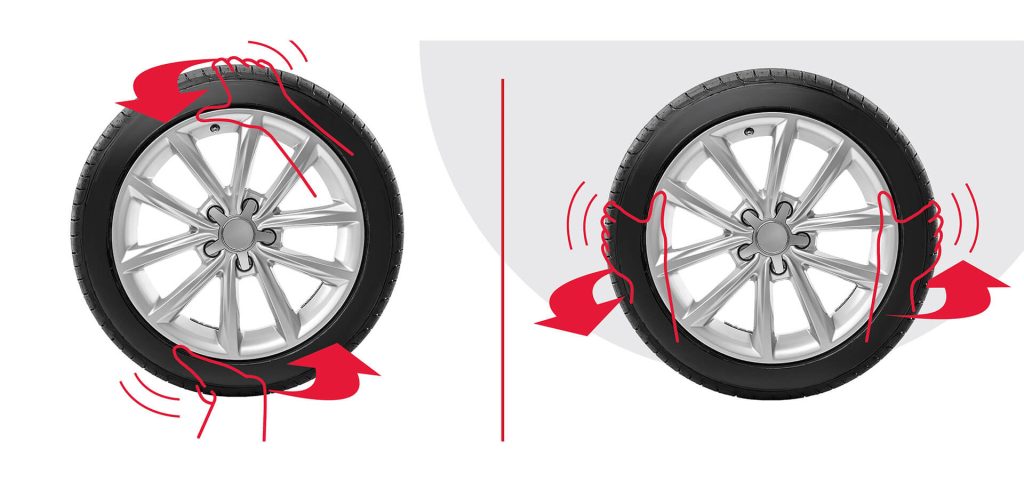
Tie Rod End Inspection
- Step 1: Lift the car with a jack to inspect the steering parts.
- Step 2: Place your hands on the tire at the 9 and 3 o’clock positions, then push and pull the tire rapidly to check the tie rod end. If you feel any looseness in its movement, it is a sign to replace the tie rod end.
Ball Joint Inspection
- Step 1: Lift the car with a jack to inspect the ball joint.
- Step 2: Hold the wheel at both the 12 o’clock and 6 o’clock positions, then push and pull the wheel to feel for any looseness in its movement. If you feel any looseness, it is a sign to replace the ball joint.
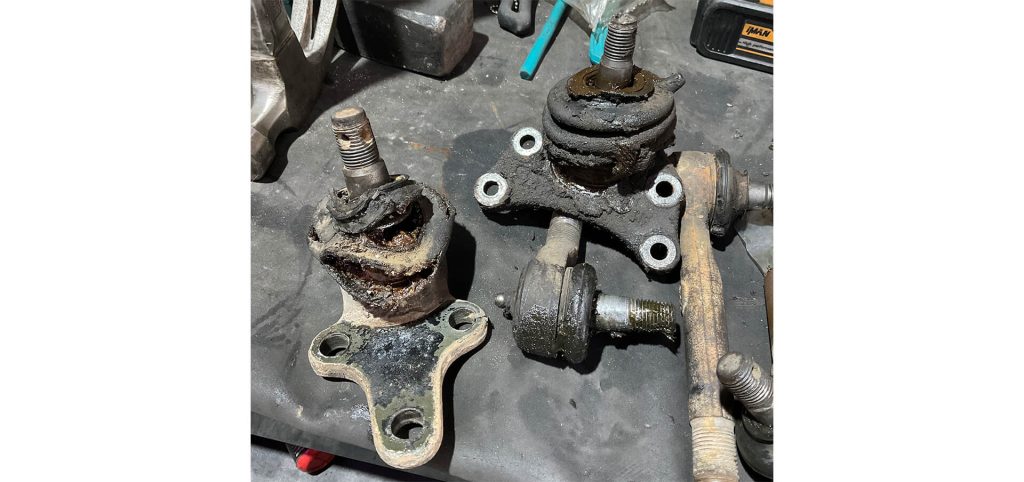
Rusting or general wear and tear is present on the suspension parts.